How Each System Works
Traditional Soldering Tips
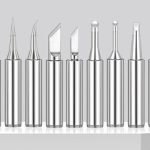
A traditional tip is a separate component that mounts onto a heating element. The assembly consists of three distinct parts:
- Heating element — a ceramic or metal-clad heater that generates heat
- Temperature sensor — a thermocouple that reads tip temperature
- Soldering tip — a slip-on or screw-on metal tip that transfers heat to the joint
These three components fit together mechanically. Heat must travel from the heater through the sensor housing and into the tip before reaching the workpiece.
Cartridge Tips
A cartridge integrates the heater, sensor, and tip into a single unit. The heating element sits directly inside the tip body, and the thermocouple is embedded at the tip end, close to the working surface.
This integrated design eliminates the mechanical interfaces between separate components. Heat generation and sensing happen at the same location where soldering occurs.
Thermal Performance Comparison
The most significant difference between the two systems is thermal response.
Heat Transfer Efficiency
In a traditional assembly, heat travels through multiple mechanical joints before reaching the tip. Each interface introduces thermal resistance. The further the heater sits from the tip end, the more heat is lost along the way.
A cartridge places the heater directly inside the tip shell. The thermal path from heater to workpiece is shorter, and there are no mechanical interfaces to cause resistance.
Temperature Recovery
Temperature recovery speed matters in production soldering. Every joint draws heat from the tip, causing a temperature drop. The faster the system recovers, the more consistent your joints will be.
| Metric | Traditional Tip | Cartridge Tip |
|---|---|---|
| Heat-up time (room temp to 350C) | 15-30 seconds | 5-10 seconds |
| Temperature recovery after joint | 3-8 seconds | 1-2 seconds |
| Tip-to-heater distance | 15-25mm (through mechanical joints) | <5mm (integrated) |
| Temperature accuracy at tip end | +/-5-10C (sensor is remote) | +/-1-3C (sensor is embedded) |
For operators doing continuous production soldering, this difference compounds over hundreds of joints per shift. Faster recovery means more consistent thermal profiles across all joints.
Temperature Sensing Accuracy
In a traditional system, the thermocouple reads temperature at a point between the heater and the tip. The actual tip-end temperature may differ from the reading by 5-10 degrees or more, especially during rapid soldering.
A cartridge sensor sits at the tip end itself. The reading reflects the actual working temperature more accurately. This precision matters for sensitive components with tight thermal tolerances.
Durability and Replacement
Traditional Tip Lifespan
Traditional tips are consumable items. The iron plating wears down over time, especially at higher temperatures or with abrasive lead-free solders. However, when a tip wears out, you replace only the tip itself. The heater and sensor remain in use.
Typical replacement cost per tip change is relatively low.
Cartridge Lifespan
Cartridges also wear through their plating over time. When a cartridge reaches end of life, you replace the entire integrated unit — heater, sensor, and tip together.
This means the per-replacement cost is higher. However, several factors offset this:
- The integrated heater is sized precisely for the tip, so it operates efficiently and does not degrade prematurely
- There is no risk of damaging the heater during tip changes (a common failure mode in traditional systems)
- Sensor accuracy does not degrade over time because the sensor is replaced with each cartridge
Total Cost of Ownership
For a production line running 8 hours a day, total cost depends on how you manage replacements:
| Cost Factor | Traditional System | Cartridge System |
|---|---|---|
| Initial station cost | Lower | Higher |
| Per-replacement cost | Lower (tip only) | Higher (full cartridge) |
| Heater replacement | Periodic (separate part) | Included in cartridge |
| Sensor replacement | Periodic (separate part) | Included in cartridge |
| Downtime for maintenance | More frequent (multiple wear parts) | Less frequent (single unit swap) |
Over 12 months of continuous production, the total cost gap narrows considerably when you factor in heater and sensor replacements for the traditional system.
When to Choose Each System
Choose Traditional Tips When
- Your application involves light to moderate soldering volume
- Budget for initial equipment is limited
- You need a wide variety of tip shapes and sizes for occasional use
- Your operators are experienced with tip installation and maintenance
Choose Cartridge Tips When
- You run continuous production soldering shifts
- Thermal consistency across joints is critical
- You want minimal maintenance downtime
- You are soldering temperature-sensitive components that require precise thermal control
- Speed of tip changes matters (cartridges swap in seconds with no alignment)
Common Misconceptions
“Cartridges are just overpriced tips.”
Cartridges include a precision heater and sensor. Comparing the price of a cartridge to a bare tip ignores the components you would otherwise purchase and replace separately.
“Traditional tips cannot handle lead-free soldering.”
Traditional tips handle lead-free soldering without issue when paired with a sufficiently powerful station. The difference lies in thermal recovery speed, not capability.
“Cartridge systems lock you into one brand.”
While cartridges are not interchangeable between brands, this is also true for most traditional tip-and-heater systems. Cross-brand compatibility is limited in both formats.
Want to learn more about our manufacturing capabilities and quality standards? Visit our About Us page to see how we produce both traditional tips and cartridges to meet international specifications.